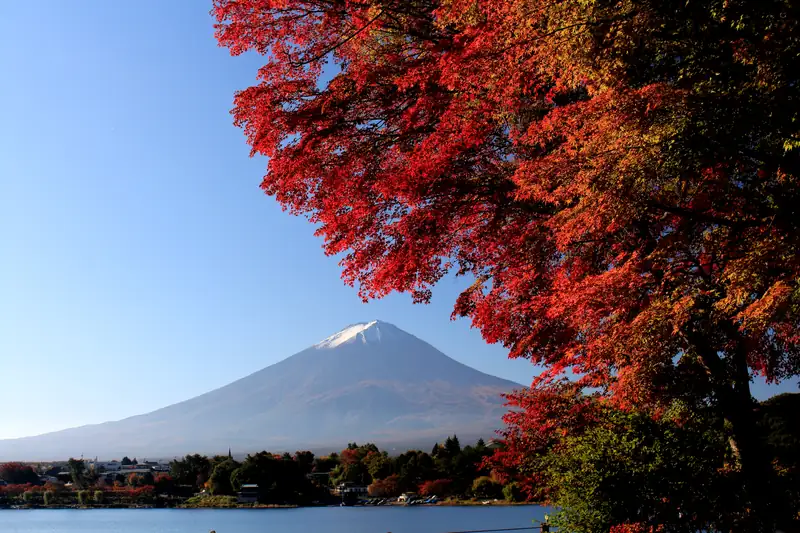
Lake Kawaguchiko: things to do and how it compares
Lake Kawaguchiko is the Fuji Five Lake with the train station, the most hotels and the best-known Fuji photo spots.
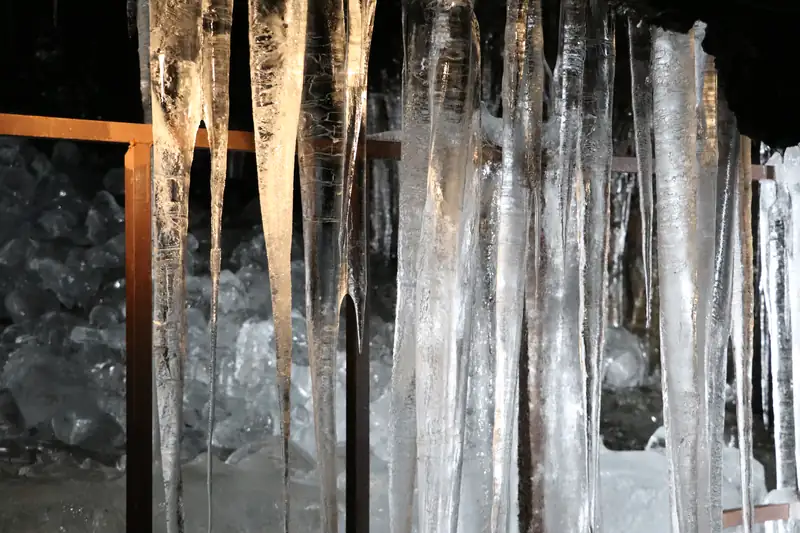
Narusawa Ice Cave and Fugaku Wind Cave are two lava caves in the Aokigahara forest on Mt Fuji's north-west side, a short walk apart. Each costs ¥350 for adults and opens from 9:00, with closing times that change by season. Inside it stays 0 to 4 °C all year, so bring a jacket even in summer.
The Narusawa Ice Cave and the Fugaku Wind Cave are two lava tubes on the north-west side of Mt Fuji, about 15 minutes’ walk apart. Each costs ¥350 for an adult and opens at 9:00, closing between 16:00 and 17:30 depending on the season. Inside it stays between 0 and 4 °C all year, and in the ice cave the ice stays frozen.
They are a good half-day out from Lake Yamanaka, about 27 km away, roughly 34 minutes by car, and they work in any weather. When Fuji is hidden in cloud and the lake viewpoints are pointless, a cave is not.
From the operator’s site, checked October 2026. Both caves charge the same and keep the same hours.
| Ticket | Narusawa Ice Cave | Fugaku Wind Cave |
|---|---|---|
| Adult (junior high and up) | ¥350 | ¥350 |
| Child (primary and under) | ¥200 | ¥200 |
| Group of 15+, adult / child | ¥250 / ¥100 | ¥250 / ¥100 |
| School group (junior and senior high) | ¥200 / ¥100 | ¥200 / ¥100 |
| Period | Hours (both caves) |
|---|---|
| 1 August to 15 October | 9:00 to 17:30 |
| 16 October to 15 November | 9:00 to 17:00 |
| 16 November to 15 February | 9:00 to 16:30 |
| 16 to 28 February | 9:00 to 16:00 |
| 1 to 15 March | 9:00 to 16:30 |
The operator’s table covers August to mid-March; it says hours can change with the weather or the state of the cave. Japan-guide lists no closing days.
Combined ticket: the operator’s site does not list one. Visitor reports mention a ticket covering both caves, at prices that differ between sources, so check at the window instead of relying on a figure from the web.
Both caves were made in 864, during an eruption of Nagaoyama, one of Mt Fuji’s side volcanoes. A flow of lava, the Aokigahara lava, ran down between older cones, and the two tunnel-shaped caves formed inside it. The operator says the two caves were made national natural monuments in 1929 and are valued by geologists.
The same lava flow is now covered by the Aokigahara forest, and the ice cave sits at its eastern edge.
This is the colder and harder of the two. The route is a short loop, about 150 m and 10 to 15 minutes according to Japan’s tourism agency, which describes the entrance shaft as about 21 m deep. Japan-guide warns of low ceilings and slippery stairs. The deepest part stays below freezing all year, and from the early 1900s the cave was used to store ice.
Wear shoes with grip and keep a hand free for the stairs.
The operator’s own advice is worth repeating: the cave steps are steep, and the sudden change in temperature can be hard on people with weak legs or a heart condition.
The wind cave is easier: a horizontal tunnel about 201 m long and up to 8.7 m high, which japan-guide calls the most walkable of the area’s caves. The operator says it averages 3 °C even in summer. Until the early Showa period (the late 1920s and 1930s) it was used as a natural refrigerator to store silkworm eggs. The visit route takes about 15 minutes and passes ice pillars that do not melt in summer, lava shelves and ropy lava.
One odd detail the operator points out: the cave swallows sound. The basalt walls absorb it, so voices do not echo.
If you only have time for one, this is how they compare, from the operator, japan-guide and Japan’s tourism agency.
| Narusawa Ice Cave | Fugaku Wind Cave | |
|---|---|---|
| Route | Loop of about 150 m, 10 to 15 min | About 15 min visit route in a 201 m tube |
| Temperature | Deepest part below freezing all year | About 3 °C on average |
| Walking | Low ceilings, steep and slippery stairs | The easier walk of the two |
| What stands out | The cold and the descent into the lava | Ice pillars, lava shelves, ropy lava, no echo |
| Price | ¥350 adult | ¥350 adult |
Choose the wind cave with small children or anyone unsteady on stairs. Choose the ice cave if you want the colder, more cramped experience.
Japan-guide gives about 15 minutes on foot between the two along the main road. With 10 to 15 minutes in the ice cave and about 15 in the wind cave, both caves and the walk between them fit into roughly an hour.
Toilets are next to the wind cave car park and next to the ice cave entrance. There are none inside the caves or in the forest.
The operator also runs guided nature walks: a one to two hour course that takes in both caves, and a three hour course to the Sankodai viewpoint. Details are on the operator’s site.
The caves are not the only lava features in Narusawa village. Japan’s tourism agency lists the Narusawa lava tree molds as a national special natural monument, and the cave operator says the village’s lava tree molds are among the world’s leading sites for the number of spiracles. They are a separate site from the two caves.
| From | How | Time |
|---|---|---|
| Lake Yamanaka (Asahigaoka) | Car | About 34 min, 27 km |
| Kawaguchiko IC | Car | About 20 min |
| Kawaguchiko Station | Local bus to Fuketsu or Hyoketsu stop | About 30 min |
| Kawaguchiko Station | Fujikyu Green Line or Blue Line sightseeing bus | Green about 50 min, Blue about 30 min (infrequent) |
Drive time from Lake Yamanaka is a free-flow estimate. Bus times are from the operator and japan-guide; japan-guide gives only 15 minutes for the local bus, so allow for either. The Green, Blue and Red sightseeing lines share a pass of ¥1,500 for one day or ¥2,000 for two (checked October 2026), and the Blue Line carries on to Lake Shojiko and Lake Motosuko.
Without a car from Lake Yamanaka, get to Kawaguchiko Station first: the Fujikko-go loop bus takes 51 minutes from Asahigaoka, and Gotemba-line buses are quicker. Then change to a bus west. The Lake Kawaguchiko guide covers the station and its bus lines.
The Green Line bus that serves the caves also loops Lake Saiko, and the Fuji Shibazakura Festival venue near Lake Motosu is further west, so in late April and May you can pair a cave with the moss phlox fields. The Fuji Five Lakes guide puts the western lakes in context, and things to do near Mt Fuji lists more for a cloudy day.
None of the coach day tours on our tours page stop at the caves; they are easiest by car or on the Kawaguchiko sightseeing buses.
Adults (junior high and up) pay ¥350 and children ¥200, according to the operator's site, checked October 2026. Groups of 15 or more pay ¥250 and ¥100. The Fugaku Wind Cave next door charges the same. The operator's site lists no combined ticket for both caves; visitors report one at the ticket windows, so ask there rather than counting on a discount.
Both caves open at 9:00. Closing time changes with the season: 17:30 from 1 August to 15 October, 17:00 from 16 October to 15 November, 16:30 from 16 November to 15 February, 16:00 for the rest of February and 16:30 from 1 to 15 March. Japan-guide lists no closing days. Hours can change with the weather or conditions in the cave.
The operator says both caves stay between 0 and 4 °C all year. The ice cave is the colder of the two: japan-guide says it is usually below freezing, and it was used from the early 1900s to store ice. The wind cave averages about 3 °C. Take a warm layer in summer, and wear shoes with grip, because the steps inside can be icy.
It is short but awkward. Japan-guide describes a circular route with low ceilings and slippery stairs. The operator warns that the steep steps and sudden cold can be hard on people with weak legs or heart conditions. Fugaku Wind Cave is the easier of the two, a horizontal lava tube about 201 m long and up to 8.7 m high.
Take a bus from Kawaguchiko Station. The operator gives about 30 minutes to the Fuketsu or Hyoketsu stops by local bus. Fujikyu's Green Line and Blue Line sightseeing buses also stop there, and their shared pass costs ¥1,500 for one day (checked October 2026). From Lake Yamanaka, reach Kawaguchiko Station first by bus or car, then change.
Lake Kawaguchiko is the Fuji Five Lake with the train station, the most hotels and the best-known Fuji photo spots.
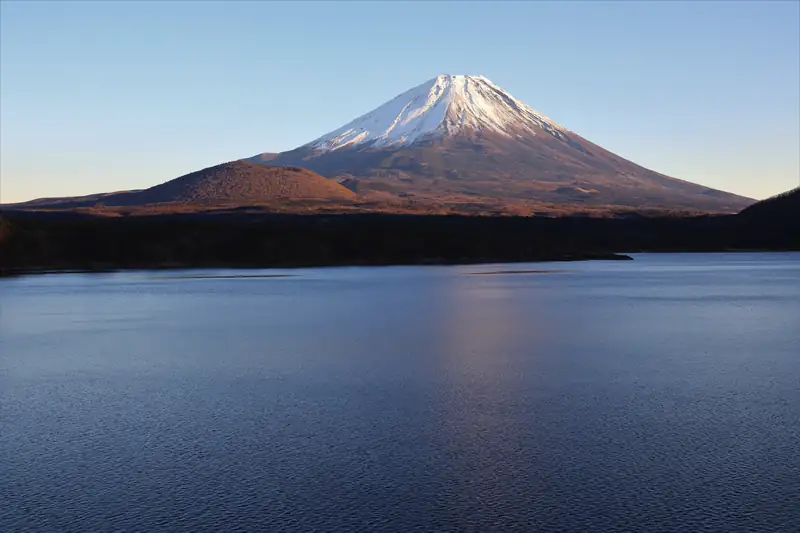
The Fuji Five Lakes are Yamanaka, Kawaguchiko, Saiko, Shoji and Motosu, strung in an arc along the north side of Mt Fuji in Yamanashi.
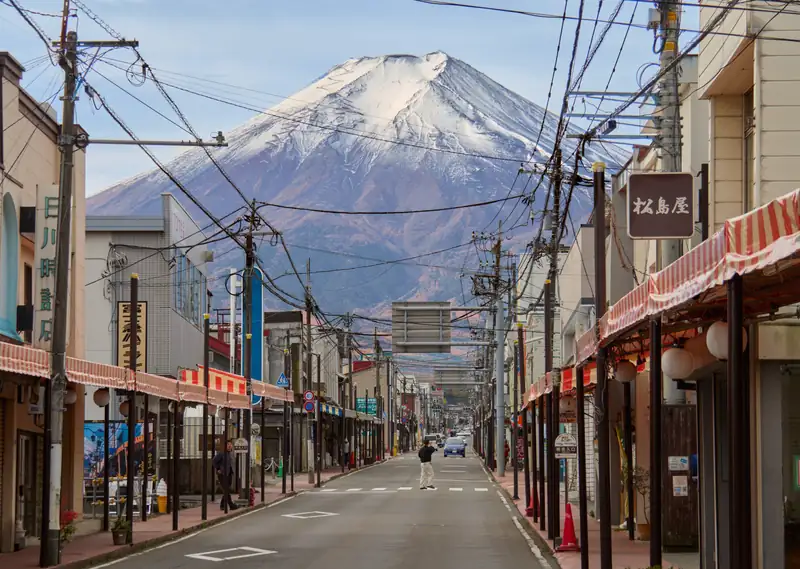
The best things to do near Mt Fuji are around the Fuji Five Lakes: watch Fuji from Lake Yamanaka's north shore, ride the KABA amphibious bus, walk Oshino Hakkai's spring ponds, climb to the Chureito Pagoda, visit Kitaguchi Hongu Fuji Sengen Shrine and Nenba's thatched village, and drive to the 5th Station.
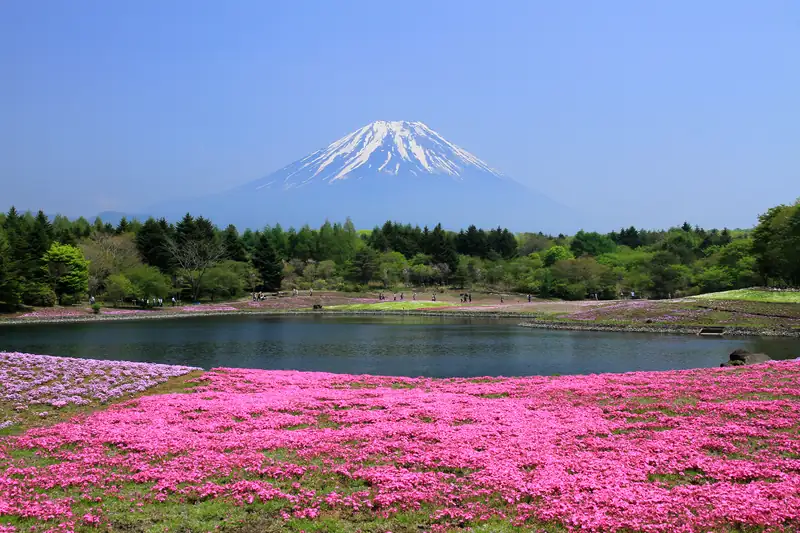
The Fuji Shibazakura Festival is a spring display of about 500,000 pink and white moss phlox plants with Mt Fuji behind, held at Fuji Motosuko Resort near Lake Motosu.