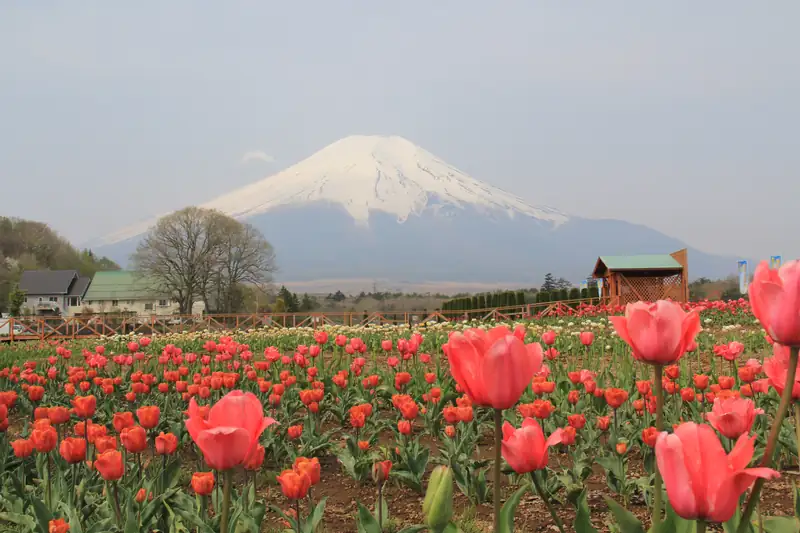
Hananomiyako Koen is a village-run flower park on the north-west side of Lake Yamanaka, with about 300,000 m² of fields facing Mt Fuji. The outdoor fields are free; the Seiryu no Sato zone costs ¥600 in summer and nothing from December to mid-March. Tulips open in late April, sunflowers in August, cosmos in September.
Yamanakako Hananomiyako Koen (山中湖花の都公園, “flower capital park”) is a village-run flower park on the north-west side of Lake Yamanaka, with about 300,000 m² of fields facing Mt Fuji. The outdoor flower fields are free. A paid zone called Seiryu no Sato, with a waterfall, a water playground and a greenhouse, costs ¥600 for adults in summer and nothing in winter. Parking is ¥300. Tulips open in late April, sunflowers in August and cosmos in September.
What blooms when at Hananomiyako Koen
The park sits at about 1,000 m, and Japan’s tourism agency notes that its flowers open roughly a month later than Tokyo’s. The first big display is tulips in late April; the last is cosmos and buckwheat in October. A frost ends the outdoor season. In its 12 October 2026 update the park asked visitors to come before the first frost.
Checked October 2026, from the park’s flower calendar. The park calls these dates a guide only; for the current state, phone the park on 0555-62-5587.
| Flower |
Best |
Where |
Number of plants |
| Tulips |
Late April to early May |
Flower fields |
About 110,000 |
| Nemophila |
Early May to early June |
Seiryu no Sato |
Not given |
| Yellow mustard (kikarashi) |
Mid to late June |
Flower fields |
About 3 million |
| Baby’s breath |
Late June to early July |
Flower fields |
About 350,000 |
| Cornflowers |
Late June to mid-July |
Flower fields |
About 250,000 |
| California poppies |
Late June to mid-July |
Flower fields |
About 400,000 |
| Field poppies |
Late June to mid-July |
Flower fields |
About 350,000 |
| Zinnias |
Mid-July to early October |
Flower fields |
About 700,000 |
| Annabelle hydrangeas |
Mid-July to mid-August |
Seiryu no Sato |
Not given |
| Sunflowers |
Mid to late August |
Flower fields |
About 100,000 |
| Yellow cosmos |
Late August to mid-October |
Flower fields |
About 3.2 million |
| Cosmos |
Mid-September to mid-October |
Flower fields |
About 2.7 million |
| Red buckwheat, buckwheat, late sunflowers |
Late September to early October |
Flower fields |
About 180,000, 80,000 and 20,000 |
| Strelitzia (bird of paradise) |
Early January to mid-March |
Furara greenhouse |
Not given |
| Orchids and 200 kinds of succulents |
All year |
Furara greenhouse |
Not given |
Weather moves these dates. In September 2026 the park reported sunflowers knocked flat but still flowering, and long rain spoiling the buckwheat. Phone ahead if you are coming for one flower.
If you are planning around Mt Fuji as much as the flowers, the summer fields are the gamble: Fuji hides in cloud more often from June to September. Late April tulips and the autumn cosmos give you better odds. Our guide to the best time to see Mt Fuji has the month-by-month picture.
Fees and hours by season
The park has two parts. The flower fields and farm area are free. Seiryu no Sato, the paid zone, holds the Myojin waterfall, an outdoor water playground, the Furara all-weather greenhouse, and lava tree moulds, hollows left where lava swallowed trees, found when the park was built and kept so visitors can see them.
Checked October 2026, from the park’s own fee page:
| Season |
Adult |
Primary and junior high |
Hours |
| 16 April to 15 October |
¥600 |
¥240 |
8:30 to 17:30 |
| 16 October to 30 November |
¥360 |
¥150 |
9:00 to 16:30 |
| 1 December to 15 March |
Free |
Free |
9:00 to 16:30 |
| 16 March to 15 April |
¥360 |
¥150 |
9:00 to 16:30 |
Children under primary-school age go free all year. Group rates apply from 20 people, and there are disability rates. Last entry is 30 minutes before closing. The park closes on Tuesdays from 1 December to 15 March, except public holidays and the New Year holidays; the rest of the year it opens daily.
Parking costs ¥300 per car and ¥1,000 per coach, and the park asks every visitor to use its paid car park. Older travel sites still list ¥500 for Seiryu no Sato; the park’s current price is ¥600.
What else is in the park
- Furara greenhouse: a glasshouse themed on flowers and people, with tropical plants and seasonal flowers, so there is something in bloom on a wet day.
- Water playground: an outdoor play area for children in Seiryu no Sato. In 2025 the park posted that some of the equipment was broken and out of use, so check if this is the reason for your visit.
- Bring-your-own tent area: since 2025 you can pitch a day tent on the lawn in Seiryu no Sato.
- Food: you can bring a packed lunch and eat it on the lawns and benches. There is a free rest house, Shimizukan, with tatami rooms for bad weather, and the park has its own hoto noodle restaurants and shops.
- Pets: dogs are welcome on a lead at no charge. In the Furara greenhouse you must carry them or keep them in a bag.
- Wheelchairs: the paths are usable, with some small steps outdoors, and the car park lends wheelchairs.
It is about 1,000 m up, so it is cooler than Tokyo in summer and cold in winter. The park suggests bringing an extra layer.
Diamond Fuji at the flower park
From late November to mid-January the park becomes one of the lake’s Diamond Fuji viewpoints, with the sun setting onto the summit at about 15:23 to 15:46. The tourism association gives those dates; the prefecture says mid to late December. Nothing is in flower then, and the fields are wide open. Remember the Tuesday closures in winter and the 16:30 closing time. The full calendar for every viewpoint is in our Diamond Fuji guide.
Getting to Hananomiyako Koen
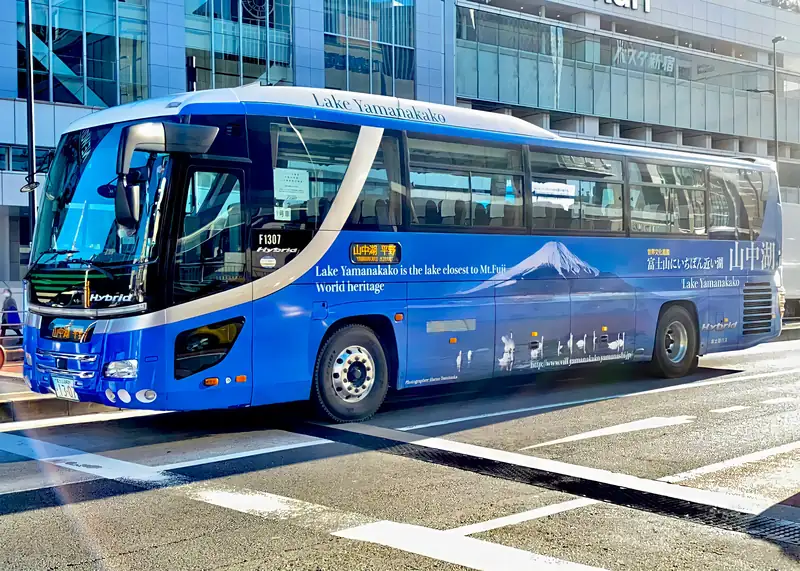
By bus. The prefecture gives about 25 minutes by bus from Fujisan Station on the Fujikyu line. The Fujikko loop bus, which the park itself recommends, stops at the park: it runs from Kawaguchiko Station through Fuji-Q Highland, Fujisan Station and Oshino Hakkai, then round the lake. You can hop on and off. Checked October 2026, the Fujikyu area pass costs ¥1,800 for one day and ¥2,200 for two (adults), and it covers the Fujikko bus.
From Tokyo. Highway buses from Shinjuku and Tokyo Station run to the lake; see Tokyo to Lake Yamanaka for routes and fares. Change to the Fujikko bus at Fujisan Station if your bus does not pass the park.
By car. About 5 minutes from Yamanakako IC on the Higashi-Fuji Goko Road. Use the paid car park.
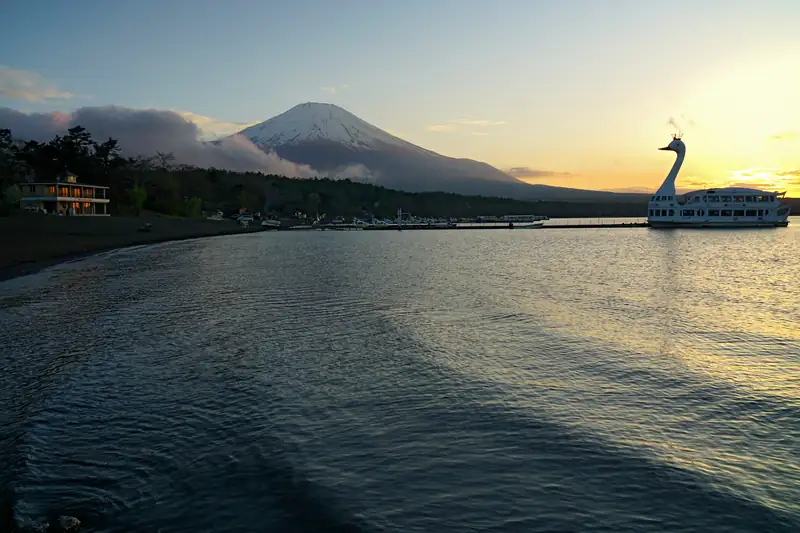
On a tour. If you are travelling with small children and would rather not juggle buses, a private family day trip from Tokyo covers pedal swan boats on the lake, the flower park and its water play area, and an afternoon in Oshino, with tickets included.
Nearby
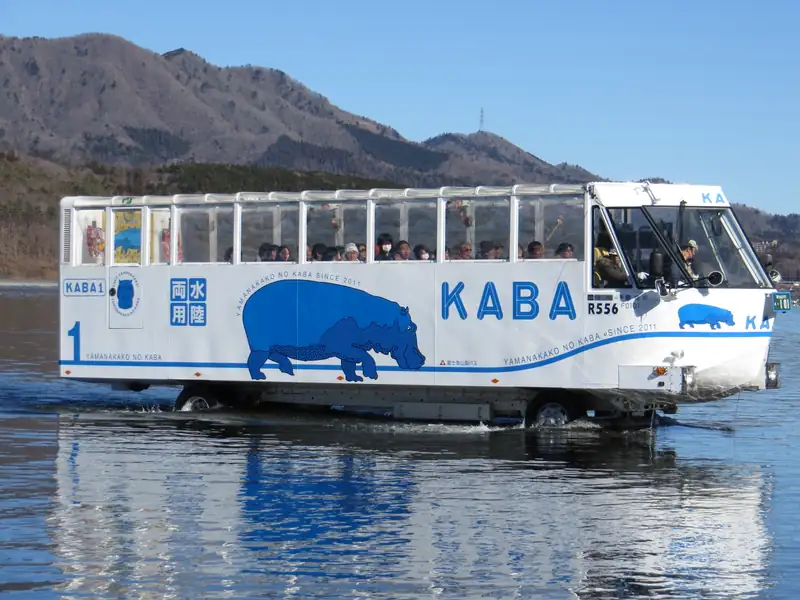
Benifuji no Yu, the hot spring a short walk from the park, is closed until a planned March 2027; our Lake Yamanaka onsen guide lists the baths that are open. Down at the lake you can ride the KABA amphibious bus or the swan boat from Asahigaoka. For more ideas, see things to do near Mt Fuji or the Mt Fuji tours page.