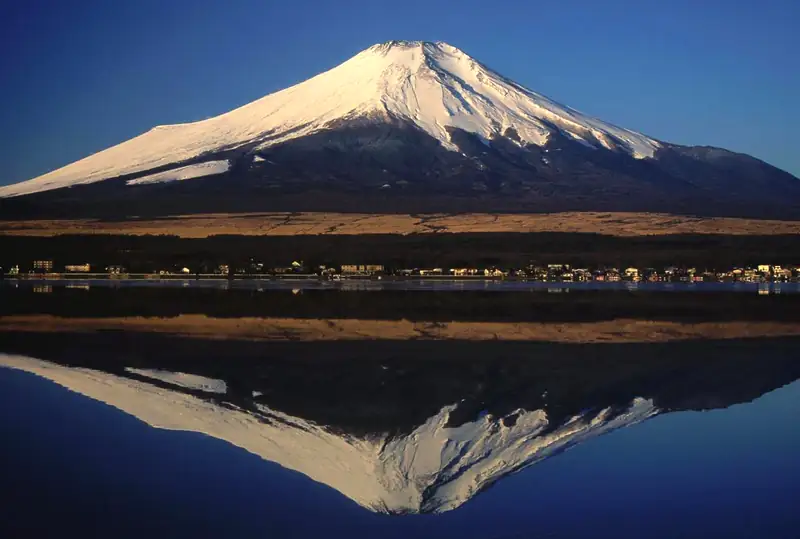
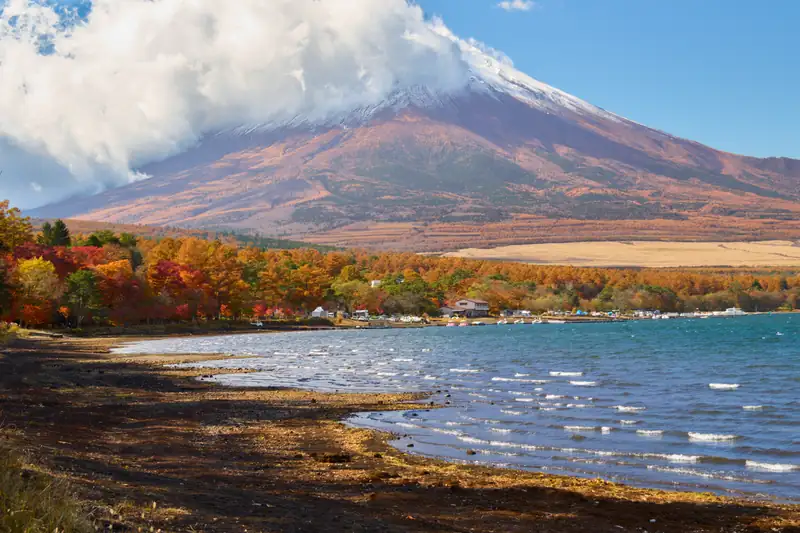
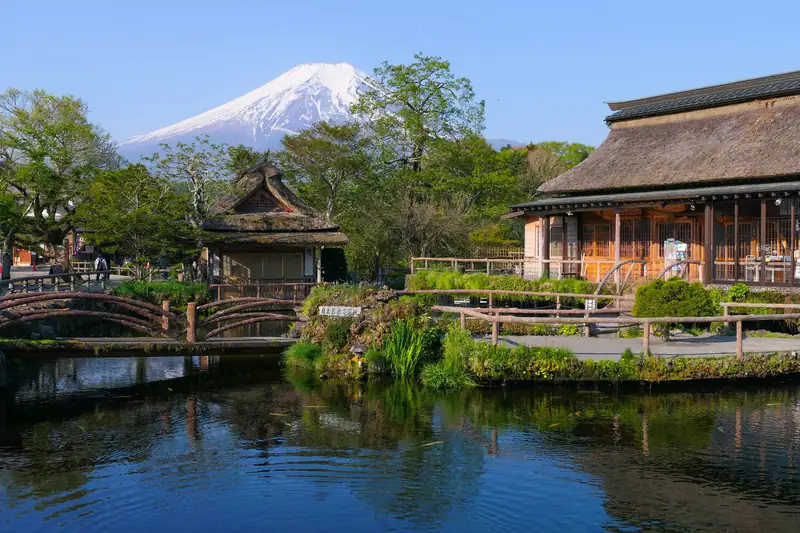
Mt Fuji shows in full on about 138 mornings a year in Fuji City's 35-year count: around 20 days in December, but only 3 to 5 in June, July and August. To check today, open an official live camera first, then the JMA forecast. Go early: 8am beats the afternoon.
Mt Fuji is visible less often than the postcards suggest. Fuji City in Shizuoka has recorded the mountain every day since 1991, and across 35 years the whole of Fuji showed at 8am on only about 138 days a year. December averages about 20 clear mornings. July averages 3.
So to answer “is Mt Fuji visible today”, don’t trust a sunny forecast for the towns. Look at a live camera first, then the forecast for the summit area, and go early. The cameras, forecasts and month-by-month odds below are the ones we use for planning a day at Lake Yamanaka and the other Fuji Five Lakes.
Is Mt Fuji visible today? Official live cameras
These are run by a tourism body, a prefecture or a national ministry. Private webcams come and go; official ones are the safer bookmark. Lake Yamanaka and the Fuji Five Lakes are on the north side of the mountain, so the Yamanashi cameras show the view you will actually get there.
Checked October 2026.
| Camera |
Run by |
Viewpoint and side of Fuji |
Link |
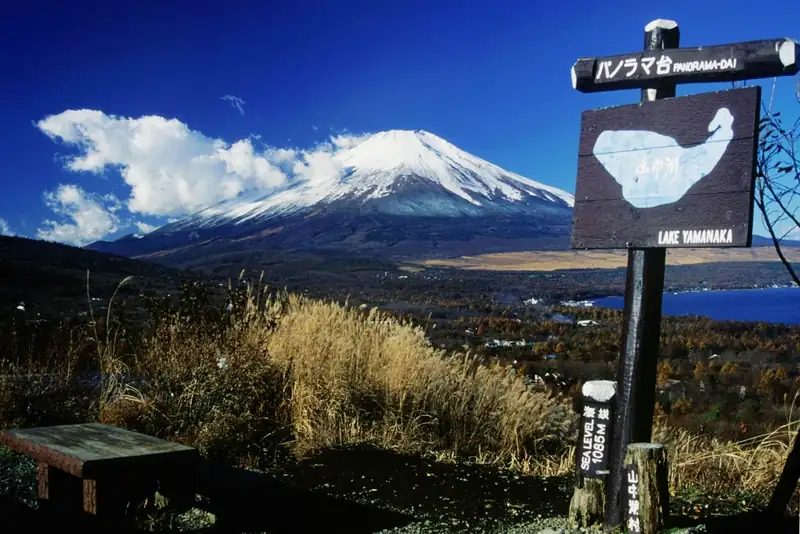
| Zekkei-kun, Panorama-dai (wide and telephoto) |
Yamanakako Tourist Association |
Panorama-dai lookout above Lake Yamanaka; north-east side |
lake-yamanakako.com/zekkei |
| Mt Fuji Panoramic Ropeway summit deck (4K) |
Ropeway operator (Fujikyu group) |
Mt Tenjo above Lake Kawaguchiko; north side |
mtfujiropeway.jp |
| Fujisan Watcher (7 cameras) |
Yamanashi Tourism Organization |
Lake Shoji, Fujigane, Shindo Pass, Lake Kawaguchiko, Fujiyoshida, Lake Yamanaka, Senen-Fuji; north and west |
yamanashi-kankou.jp camera index |
| Mt Fuji Live View (in English) |
Shizuoka Prefecture |
Shimizu Port, Fujinomiya, Gotemba; south and east |
pref.shizuoka.jp/fujisanview/english |
| Fuji Sabo Office cameras (12) |
Ministry of Land, Infrastructure, Transport and Tourism |
Mostly south, west and east slopes, plus Narusawa |
cbr.mlit.go.jp/fujisabo/camera |
The Panorama-dai feed is the one to bookmark for Yamanaka. It streams through YouTube from the association’s page and may pause without notice. Shizuoka’s cameras photograph Fuji once a minute and keep a “365-Day Gallery” of past shots.
One caution: match the camera to where you are going. The Shizuoka and ministry cameras look at the mountain from the Shizuoka side, away from the lakes.
Mt Fuji forecast: where to look
Checked October 2026.
| Source |
What it tells you |
Link |
| Japan Meteorological Agency (JMA), Yamanashi |
Official forecast; the lakes are in the “Eastern and Fuji Five Lakes” area, with temperatures given for Kawaguchiko |
jma.go.jp forecast |
| JMA forecast map, English |
Same forecasts with English labels |
jma.go.jp map (English) |
| JMA Himawari satellite |
Where the cloud actually is right now |
jma.go.jp Himawari (English) |
| JMA rain radar |
Rain moving in over the next hour |
jma.go.jp nowcast (English) |
| tenki.jp (Japan Weather Association), Yamanakako |
Hour-by-hour forecast for the village, 3 days ahead, in Japanese |
tenki.jp Yamanakako hourly |
| tenki.jp Mt Fuji |
Mountain weather page, plus live readings from the summit station |
tenki.jp Mt Fuji |
How to read a Fuji forecast
A forecast of “sunny” for Kawaguchiko is a forecast for a lakeside town at about 830 m. Fuji’s summit weather station sits at 3,775 m, nearly 3,000 m higher, and the mountain can be in cloud while the shore is bright.
Fuji City’s own records show this. Between May and September the city often logged a clear sky on the plain while the mountain was hidden; the gap is widest from June to August. In July, the city averages 13 clear mornings but only 3 with the whole of Fuji in view.
What works in practice:
- The evening before, check the JMA forecast for the Eastern and Fuji Five Lakes area. If it says cloudy for the morning, the early window may not open at all.
- At breakfast, open the Panorama-dai camera. If you can see the summit and the shoulders, you have a window. It may close by late morning.
- Look at the Himawari image if the camera is grey. It shows whether the cloud over the lakes is a small patch or part of a wide band, which tells you whether waiting an hour is worth it.
Time of day: why mornings win
Fuji City logs the mountain at 8am, noon and 4pm. Over 35 years, the whole of Fuji was visible on 36.6 percent of mornings, then 23.3 percent at noon and 22.5 percent at 4pm. In 2025, the mountain was fully visible at all three times on only 62 days.
So if you only have one shot, take it before 9am. A Tokyo day tour reaches the lakes around mid-morning; staying overnight gives you the dawn. That is the main reason to stay at Lake Yamanaka or somewhere near Mt Fuji rather than doing a day trip if seeing Fuji is the whole point.
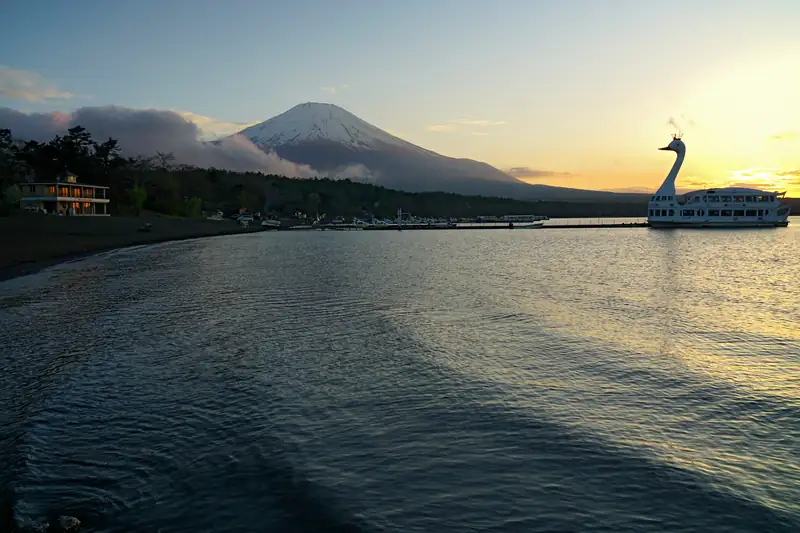
The exception is sunset in winter. From mid-October to late February the sun sets onto Fuji’s summit as seen from Lake Yamanaka, which is Diamond Fuji. On a clear winter afternoon the light at the lake is worth waiting for.
When is Mount Fuji visible? Month by month
The only month-by-month count with a stated method that we found comes from Fuji City, on the south side of the mountain. Nobody publishes an equivalent count for Lake Yamanaka, so treat these as the pattern, not a promise. The sunshine column is the Japan Meteorological Agency’s 1991-2020 average for its Yamanaka station at 992 m, which measures hours of bright sun at the lake, not whether Fuji’s top is clear.
| Month |
Whole Fuji visible at 8am (Fuji City, avg days) |
Share of mornings |
Sunshine at Yamanaka (hours, JMA) |
| January |
19 |
60% |
172 |
| February |
15 |
53% |
159 |
| March |
13 |
41% |
171 |
| April |
11 |
36% |
187 |
| May |
10 |
30% |
190 |
| June |
4 |
12% |
135 |
| July |
3 |
10% |
158 |
| August |
5 |
15% |
185 |
| September |
8 |
27% |
114 |
| October |
13 |
41% |
117 |
| November |
17 |
54% |
141 |
| December |
20 |
62% |
155 |
Fuji City, 1991 to 2025, observed by city staff at 8am. The city puts spring’s lower figures down to haze and September’s to the typhoon season.
Both sets of numbers point the same way. Late autumn and winter are the safe bet. Spring is a coin toss, often hazy even on sunny days. Summer is the long shot. For what each month brings beyond the odds (snow, flowers, festivals, crowds), see the best time to see Mt Fuji.
Lake Yamanaka weather
Lake Yamanaka is high and cool. JMA’s Yamanaka station averages a high of 4.0 °C and a low of -8.9 °C in January, and 26.6 °C and 16.8 °C in August. September (375 mm) and October (310 mm) are the wettest months; January and February the driest, at about 80 mm each. For the next three days, the tenki.jp hourly forecast for Yamanakako is the most local one.
Plan your day around the view
If the morning camera shows Fuji, go straight to the water. Hirano and Nagaike on the north shore of Lake Yamanaka face the mountain across the lake, and Panorama-dai looks down on both. Our guide to the best views of Mt Fuji ranks the viewpoints by side, access and time of day.
If it’s grey, keep the day useful. Oshino Hakkai is 10 km from the lake and its spring ponds look fine under cloud. The Narusawa ice cave is underground anyway. And for a soak, note that Benifuji no Yu is closed until a planned March 2027; Ishiwari no Yu in Hirano is open.
Coming from Tokyo for one day? The cheapest way to stack the odds is to pick your date late, a day or two out, once the JMA weekly forecast looks settled. Our Mt Fuji day trip from Tokyo guide compares them, Tokyo to Mt Fuji covers the buses and trains, and all the tours we list are on the tours page.