The best time to see Mt Fuji is November to February, when the whole mountain shows on 15 to 20 mornings a month in Fuji City's 35-year count. Summer is the worst: 3 to 5 clear mornings in June to August. Go in the early morning, and avoid Golden Week, Obon and New Year if you dislike crowds.
The best time to see Mt Fuji is from November to February. In Fuji City’s daily record, kept since 1991, the whole mountain showed at 8am on about 20 mornings in December, 19 in January, 17 in November and 15 in February. Summer is the worst time: about 4 mornings in June, 3 in July and 5 in August.
Winter is also cold, snowy at the lakes and busy around New Year. Spring has cherry blossom and hazy skies. Autumn has leaves and the first Diamond Fuji sunsets at Lake Yamanaka. Here is what each month brings.
Mt Fuji month by month
Temperatures and rain are Japan Meteorological Agency (JMA) averages for 1991 to 2020 at its Yamanaka station (992 m), on the shore of Lake Yamanaka. “Clear mornings” is Fuji City’s average number of days the whole mountain was visible at 8am, 1991 to 2025. Fuji City is on the south side of Fuji, so this is the pattern, not a count for the lakes. Event dates are 2026 unless noted.
Checked October 2026.
| Month |
High / low at Yamanaka |
Rain |
Clear mornings |
What’s on |
Crowds |
| January |
4.0 / -8.9 °C |
82 mm |
19 |
Diamond Fuji at Yamanaka sunsets; wakasagi dome-boat fishing |
New Year holiday to 4 Jan |
| February |
5.0 / -7.7 °C |
81 mm |
15 |
Diamond Fuji at Nagaike about 1 to 7 Feb, Panorama-dai mid to late Feb |
No national holiday peak |
| March |
8.8 / -3.6 °C |
175 mm |
13 |
Hananomiyako paid zone free to 15 Mar; cherry festival at Kawaguchiko from 28 Mar |
No national holiday peak |
| April |
14.5 / 1.4 °C |
181 mm |
11 |
Kawaguchiko cherry blossom to 15 Apr; Shibazakura from 11 Apr; Subaru Line open to the 5th Station from 18 Apr |
Golden Week from 29 Apr |
| May |
19.1 / 6.7 °C |
188 mm |
10 |
Shibazakura festival to 24 May |
Golden Week to 5 May |
| June |
21.5 / 12.1 °C |
221 mm |
4 |
Lavender at Oishi Park from late June |
No national holiday peak |
| July |
25.7 / 16.4 °C |
220 mm |
3 |
Climbing season from 1 Jul; private cars banned on the Subaru Line from 3 Jul |
Student sports camps at Yamanaka |
| August |
26.6 / 16.8 °C |
224 mm |
5 |
Houkosai fireworks at Yamanaka 1 Aug; Yoshida Fire Festival 26 to 27 Aug |
Obon, week around 15 Aug |
| September |
22.4 / 13.2 °C |
375 mm |
8 |
Climbing season ends 10 Sep |
No national holiday peak |
| October |
16.9 / 6.7 °C |
310 mm |
13 |
Diamond Fuji season starts mid-Oct; autumn leaves from late Oct |
Leaf-season weekends |
| November |
12.4 / 0.1 °C |
144 mm |
17 |
Yamanaka leaves festival 30 Oct to 15 Nov; Kawaguchiko leaves festival 7 to 29 Nov |
Leaf-season weekends |
| December |
6.9 / -5.6 °C |
86 mm |
20 |
Diamond Fuji at Hananomiyako mid to late Dec; Hananomiyako paid zone free from 1 Dec |
New Year holiday from 27 Dec |
The pattern is simple. The clearest months are also the coldest and driest. The wettest months at the lake, September and October, still give more clear mornings than midsummer. For the daily odds and live cameras, see Mt Fuji visibility.
Mt Fuji in winter (December to February)
This is the season to come if seeing Fuji matters most. Fuji City logged the whole mountain on 62 percent of December mornings and 60 percent of January mornings across 35 years. JMA’s Yamanaka station also shows January and February as the driest months, at about 80 mm each.
Mt Fuji in December
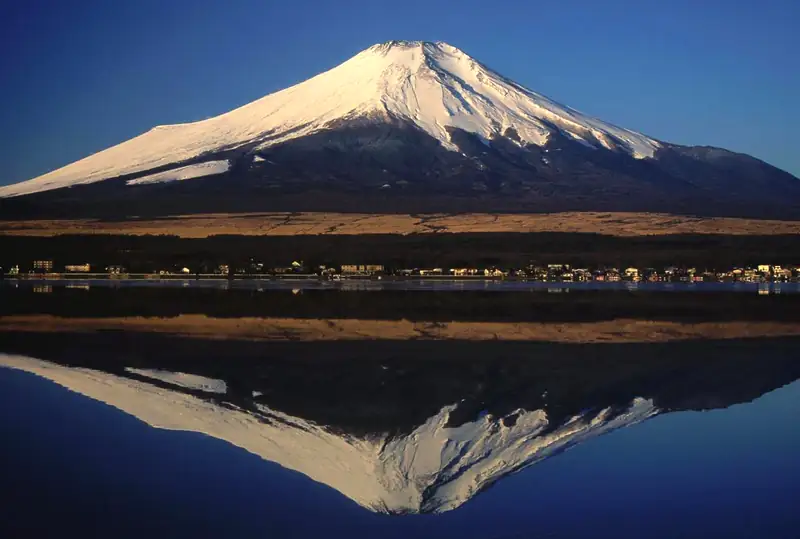
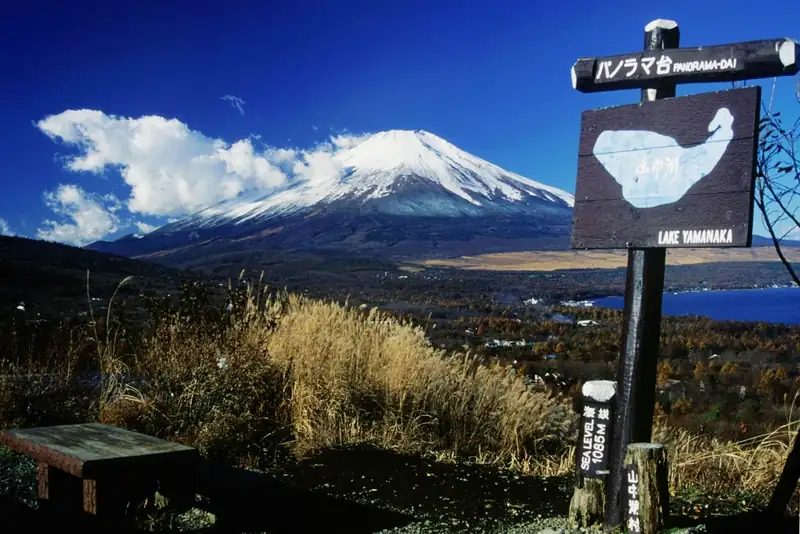
The clearest month on record. At Lake Yamanaka, the paid zone of Hananomiyako park is free from 1 December, and the prefecture puts Diamond Fuji over the park in mid to late December. The Yamanashi tourism site rates Panorama-dai best from December to February, before sunrise. Watch for New Year crowds from 27 December.
Mt Fuji in January
Almost as clear as December and the coldest month: a mean low of -8.9 °C at Yamanaka. The lake sometimes freezes at the edges, though full freezing is now rare. Wakasagi (pond smelt) fishing moves into heated dome boats. Snow tyres or chains are needed on the roads round the lake from about December to March.
Mt Fuji in February
Diamond Fuji peaks along Yamanaka’s north shore: at Nagaike about 1 to 7 February, and at Panorama-dai and Asahigaoka in mid to late February. A local site listed Diamond Fuji Weeks at the lake from 1 to 22 February 2026; the 2027 dates are not out yet.
Mt Fuji in spring and cherry blossom season (March to May)
Spring brings flowers and haze. Fuji City attributes the drop to 13, 11 and 10 clear mornings from March to May to spring haze.
Mt Fuji in March
Still cold at the lakes, with a mean low of -3.6 °C. It’s the last month of free entry to Hananomiyako’s paid zone (to 15 March). Kawaguchiko’s cherry blossom festival opened on 28 March in 2026.
Mt Fuji in April and cherry blossom
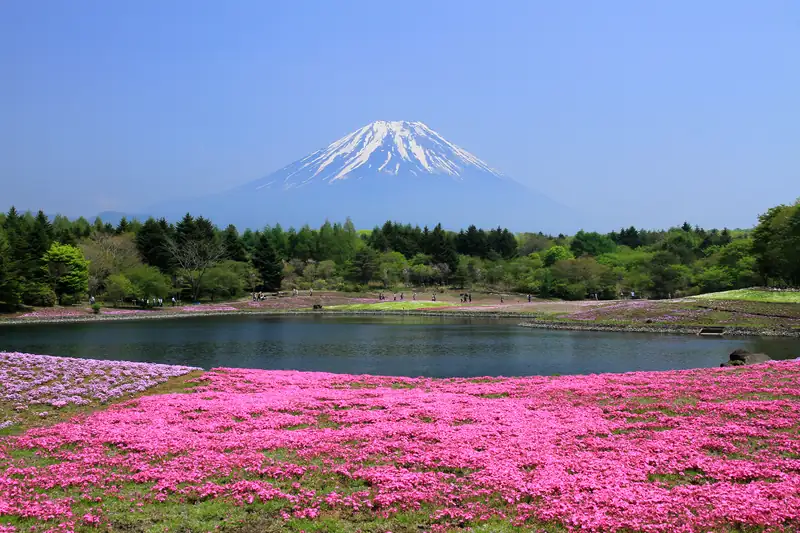
Mt Fuji cherry blossom photos mostly come from Lake Kawaguchiko’s north shore, where about 200 Somei-yoshino trees usually peak in early to mid-April. The 2026 festival there was extended to 15 April. The Chureito Pagoda is the other classic frame, but Fujiyoshida cancelled its 2026 cherry festival because of crowding, litter and trespass; the park stayed open. Lake Yamanaka sits about 150 m higher than Kawaguchiko, and we found no published bloom dates for it. The Fuji Shibazakura Festival opened on 11 April in 2026, and the Fuji Subaru Line reopened all the way to the 5th Station on 18 April after winter.
Mt Fuji in May
Golden Week (29 April to 5 May, per JNTO) is one of the busiest times on the roads round the lakes. After it, May is mild (a 19 °C average high at Yamanaka) and has the most sunshine hours of the year at the station, though only about 10 clear Fuji mornings. The Shibazakura festival closed on 24 May in 2026.
Mt Fuji in summer (June to August)
Summer is the worst time to see Mt Fuji and the only time to climb it.
Mt Fuji in June
The lowest odds in spring and early summer: about 4 clear mornings, and 221 mm of rain at Yamanaka. Oishi Park on Lake Kawaguchiko holds its herb festival from late June to mid-July, with lavender in front of Fuji when it shows.
Mt Fuji in July
The worst month of the year for views, with about 3 clear mornings. It is also when the climbing season opens: 1 July to 10 September in 2026, ¥4,000 per climber on the Yoshida Trail, advance booking, and a cap of 4,000 climbers a day. Private cars were banned from the Subaru Line from 3 July.
Mt Fuji in August
The warmest month, with a 26.6 °C average high at Yamanaka, and the lake is busy with student sports camps. Fireworks light up the lake on 1 August. The Yoshida Fire Festival in Fujiyoshida on 26 and 27 August marks the end of the climbing season. Obon, the week around 15 August, is peak holiday traffic.
Mt Fuji in autumn (September to November)
Mt Fuji in September
The wettest month at Yamanaka (375 mm), with typhoons, but the clear mornings start to climb back to about 8. The climbing season closed on 10 September in 2026.
Mt Fuji in October
October is a turning point: about 13 clear mornings, and Diamond Fuji season at Lake Yamanaka begins in mid-October at Panorama-dai and Asahigaoka. Autumn leaves start late in the month.
Mt Fuji in November
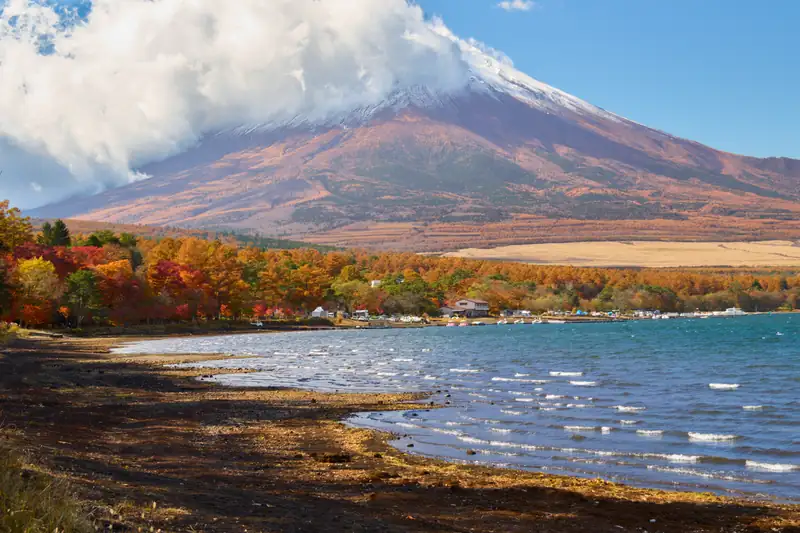
Our pick for a first visit. You get about 17 clear mornings, autumn colour, and nights just above freezing (a 0.1 °C mean low). The Asahigaoka autumn leaves festival on Lake Yamanaka ran from 30 October to 15 November in 2026, and the Kawaguchiko festival around the Momiji Corridor from 7 to 29 November. The prefecture puts peak colour at the Chureito Pagoda from late October to mid-November. Weekends get busy; go on a weekday.
Best time of day to see Mt Fuji
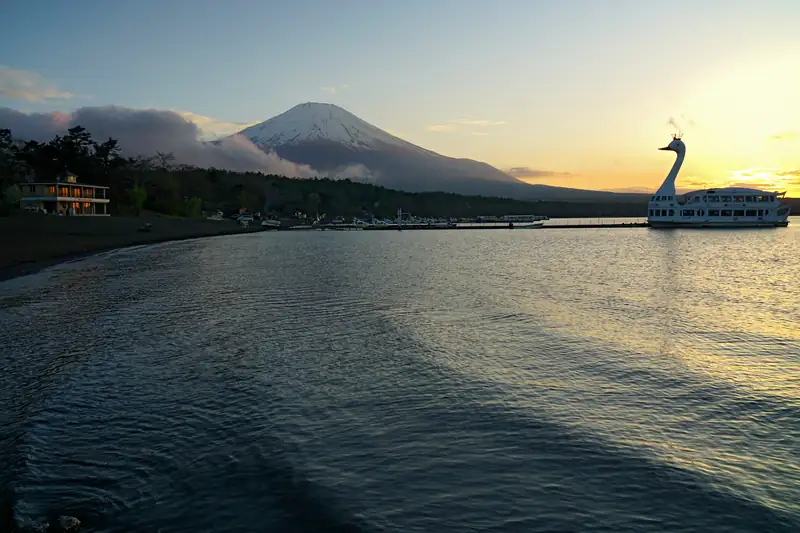
Early morning, in every season. Over 35 years, Fuji City saw the whole mountain at 8am on 36.6 percent of days and at 4pm on only 22.5 percent. The exception is a clear winter sunset at Lake Yamanaka, when the sun drops behind the summit.
Best time to visit Lake Yamanaka for Fuji
Come between late October and February and stay at least one night, so the first morning is yours. The lake is on the north-east side of Fuji, which puts sunset behind the mountain in winter. Our Lake Yamanaka hotels guide covers where to sleep, and the best views of Mt Fuji guide covers where to stand. If you only have one day, go on a weekday, check the forecast the night before and book a tour that reaches the lakes early.