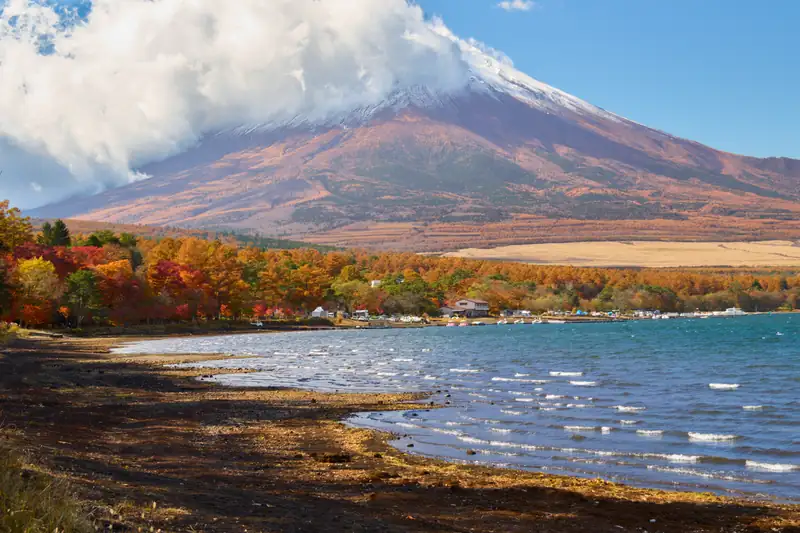
Diamond Fuji is the moment the setting sun sits exactly on Mt Fuji's summit. At Lake Yamanaka you see it at sunset from about 16 October to 25 February. The spot moves round the shore: Panorama-dai first, then Asahigaoka, Hirano and Nagaike, Hananomiyako Koen around the winter solstice, and back again.
Diamond Fuji is the moment the sun sits exactly on the summit of Mt Fuji and flares like a jewel. At Lake Yamanaka it happens at sunset, and the 2026-27 season runs from about 16 October 2026 to 25 February 2027. On any clear evening in that window, one stretch of the shore lines up with the summit. The calendar below gives the date and approximate time for each viewpoint, so you can stand in the right place on the day you visit.
What Diamond Fuji is, and why Lake Yamanaka has so much of it
Japan’s tourism agency describes Diamond Fuji as the rising or setting sun directly behind Mt Fuji’s peak, glowing on top of the mountain for a few moments. Because the sun sets at a slightly different point on the horizon each day, the place where you need to stand changes daily.
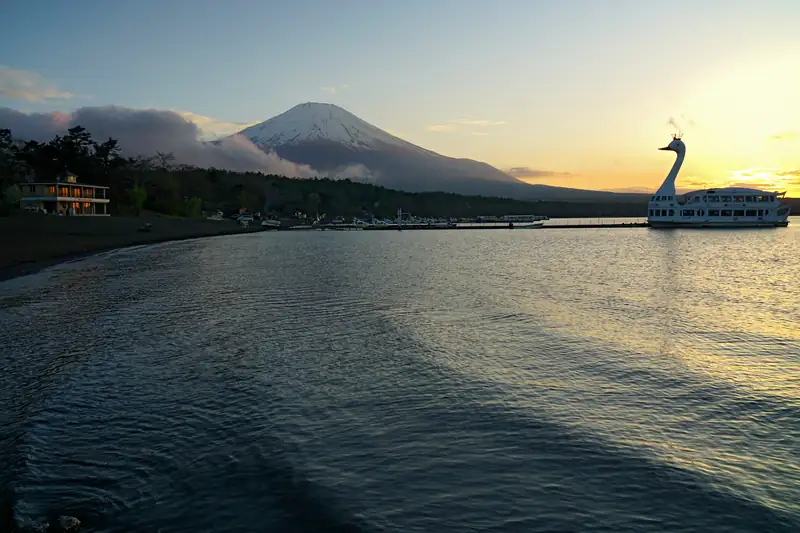
Lake Yamanaka sits to the northeast of Mt Fuji. From here the sun drops onto the summit at sunset across a long stretch of autumn and winter, roughly four and a half months. The Yamanakako Tourist Association calls the lake a holy ground for Diamond Fuji for that reason, and in season photographers line the shore.
The sunrise version needs you on the west side of the mountain instead. Lake Motosu is the usual choice; on New Year’s Day the tourism agency’s text puts the sunrise Diamond Fuji at around 7:40 from the observatory below the 1,485 m peak of Mt Ryugatake. At Yamanaka it is a sunset event only.
The 2026-27 Diamond Fuji calendar by viewpoint
The season starts at Panorama-dai, the lookout above the east end of the lake, and the sun’s setting point moves along the shore: Asahigaoka, then Hirano, Nagaike, the Yamanaka district, and finally Hananomiyako Koen. Around the winter solstice (about 22 December) it turns and retraces the same route, ending back at Panorama-dai in late February.
Checked October 2026. Dates and times are the Yamanakako Tourist Association’s guide figures, which it calls reference data; the year columns apply them to the 2026-27 season. The last column is Yamanashi Prefecture’s own guide window for the same spot.
| Viewpoint |
Autumn 2026 |
Approx. time |
Winter 2027 |
Approx. time |
Prefecture’s window |
| Panorama-dai (above the east shore) |
16 Oct |
16:22 |
25 Feb |
16:50 |
Mid to late Oct; mid to late Feb |
| Asahigaoka shore (south) |
18 Oct |
16:08 |
22 Feb |
16:35 |
Mid to late Oct; mid to late Feb |
| Hirano shore (east) |
27 Oct |
16:03 |
16 Feb |
16:33 |
Not listed separately |
| Hirano shore, far end |
31 Oct |
16:00 |
11 Feb |
16:29 |
Not listed separately |
| Kirara plaza (Hirano) |
Late Oct |
Not given |
Mid-Feb |
Not given |
Late Oct; mid-Feb |
| Below Mama no Mori (Nagaike) |
3 Nov |
15:48 |
8 Feb |
16:19 |
Not listed separately |
| Nagaike shore (north) |
6 Nov |
15:44 |
5 Feb |
16:13 |
Early Nov; early Feb |
| Ohike beach (north-west) |
13 Nov |
15:33 |
30 Jan |
16:03 |
Not listed |
| Yanajiri (梁尻, Yamanaka district) |
15 Nov |
15:30 |
27 Jan |
15:55 |
Not listed |
| Hananomiyako Koen |
Late Nov |
15:23 |
Mid-Jan |
15:46 |
Mid to late Dec |
Two sources disagree. For Nagaike, the prefecture says early November and early February, while the transport ministry’s Kanto office and the tourism association’s cycling page say mid-November and early February for the double Diamond Fuji. For Hananomiyako Koen, the tourism association says late November to mid-January and the prefecture says mid to late December. The table follows the tourism association, which publishes the most detailed list. The Environment Ministry gives about 25 February for Panorama-dai, the same as the association.
Each spot gets a few days, not one evening. If you miss the date by a day, walk a little further along the same shore.
The best viewpoints around the lake
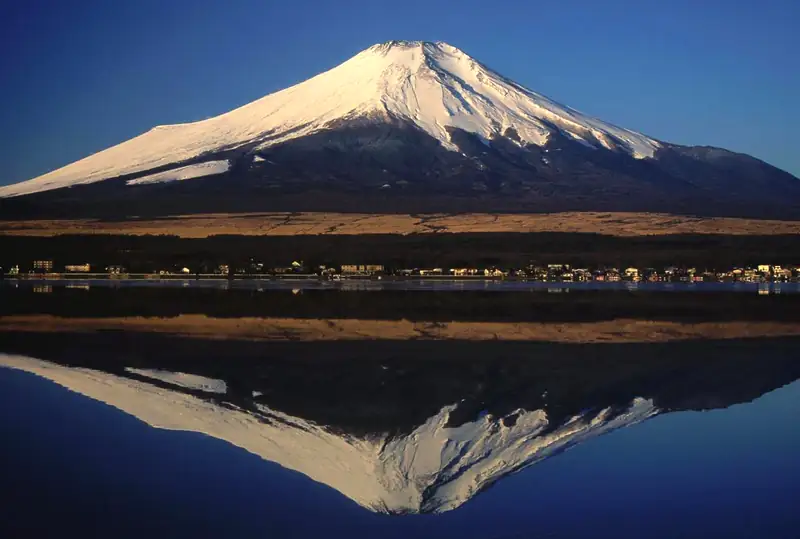
Hirano shore. The east end of the lake is the most popular photography spot at Yamanaka, and in season photographers stand in a long line along the beach. On a windless evening with a flat lake you may get the double Diamond Fuji here. Come early if you want a front spot.
Nagaike and Mama no Mori. On the north shore the mountain looks bigger than from Hirano, with the lake in between. The beach is narrow and parking is scarce. The tourism association suggests parking at Nagaike Shinsui Park and walking; many people watch from the cycling road.
Ohike beach. This is the swans’ feeding area, with a wide beach. With luck you get Fuji, the lake, swans and the sun in one frame.
Yanajiri. In the Yamanaka district on the west side, where Fuji looks largest of all the Diamond Fuji spots. There is a free car park by the lake, and the beach runs towards the mountain.
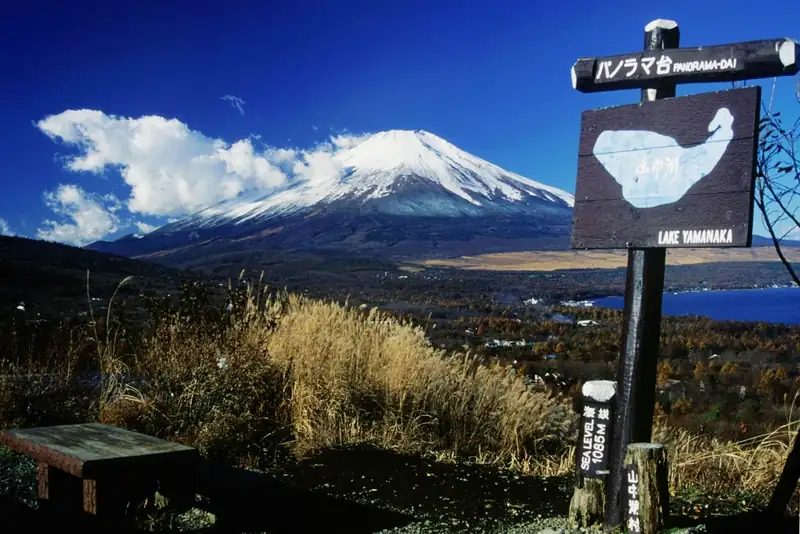
Panorama-dai. A roadside lookout on the road from Hirano towards Mikuni Pass, looking down on the lake with the Southern Alps behind. It opens and closes the season. The car park has about 7 spaces and fills fast, and the pass road ices in winter, so the association asks for winter tyres. By bus, get off at the Mikuniyama Hiking Course entrance and walk about 30 minutes.
Hananomiyako Koen. The flower park gets the mid-winter weeks. No flowers bloom then, but the grounds are wide. In winter the park opens 9:00 to 16:30 and closes on Tuesdays from 1 December to 15 March (except public holidays), so check the day before you go. Parking is ¥300. More on the park in our Hananomiyako Koen guide.
Two hikes also give Diamond Fuji views: Mt Takazasu and Mt Ohira. The prefecture asks you to treat them as mountain walks, with proper boots and clothing.
When to go: weather beats the calendar
The tourism association recommends February. The weather is more settled then, while October to December is often unstable and a clean Diamond Fuji is harder to get. The weather station at Yamanaka backs this up: average sunshine is 172 hours in January and 159 in February, against 117 in October.
If you live nearby, check the tourism association’s live Fuji camera at Kirara before you set off. Visitors coming from Tokyo should look at the forecast a day or two ahead; our Mt Fuji visibility guide covers the forecasts and webcams.
Dress for real cold. The lake sits at about 1,000 m. Average January lows at the Yamanaka station are -8.9°C, and the temperature drops fast once the sun goes behind the mountain. The beaches are uneven, so leave heels and leather shoes at home.
A local news site reported “Diamond Fuji Weeks” at the lake from 1 to 22 February 2026. The tourism association had not announced 2027 dates by October 2026.
Crowds and parking
Car parks near the viewing spots fill up at weekends in season, and some spots barely have room to stand. The tourism association asks visitors to share cars, never to park on the road, and never to use the grounds of homes or inns. On the narrow roads at Nagaike this matters most.
It also asks photographers not to damage plants or the shore for a better shot. The moment is short, which is exactly why people are tempted to leave the car on the verge for “just a minute”. Arrive early instead.
Photography tips
- Pick the spot from the date. Use the calendar above and arrive at least 30 minutes before the listed time.
- Watch the water for a double. A flat, windless lake gives the reflection. Hirano and Nagaike are the places to try.
- Expect a few moments, not minutes. The sun touches the summit briefly, so be set up and ready.
- Stay for the afterglow. The association suggests walking on to Yuyake no Nagisa (the “sunset beach” at Asahigaoka) after shooting there.
If you would rather leave the planning to someone else, a private photography tour from Tokyo times the day around sunset. From mid-October to late February its guide takes you to the Yamanaka shore where the sun sets onto the summit; outside that window it runs as an ordinary sunset tour.
Pearl Fuji
Pearl Fuji is the same alignment with the full moon instead of the sun. Because it needs both a full moon and the right angle, it is far rarer. It is not tied to fixed dates each year. Japanese travel writers name Lake Yamanaka as a place to try, early in the morning, and say a still lake can give a double Pearl Fuji. Neither the prefecture nor the tourism association publishes a Pearl Fuji calendar for the lake, so check moonset times for your dates in an astronomy app.
Getting there and staying over
Most viewpoints are on or near the lake road. The Fujikko loop bus from Fujisan Station stops at Nagaike Shinsui Koen-mae, about 40 minutes from the station, and Kirara is a 12-minute walk from the Hirano highway bus stop. Check the last bus back before you commit to a sunset; see Tokyo to Lake Yamanaka for routes.
Sunset in winter means a dark drive or bus ride home. Staying a night at the lake lets you try two evenings in case the first one clouds over. See where to stay at Lake Yamanaka and our list of hotels with a Mt Fuji view. For other times and angles, read the best views of Mt Fuji and the best time to see Mt Fuji, or browse Mt Fuji tours.